UK Gamstop Bank Blocks & Payment Restriction Tools
 Available in GB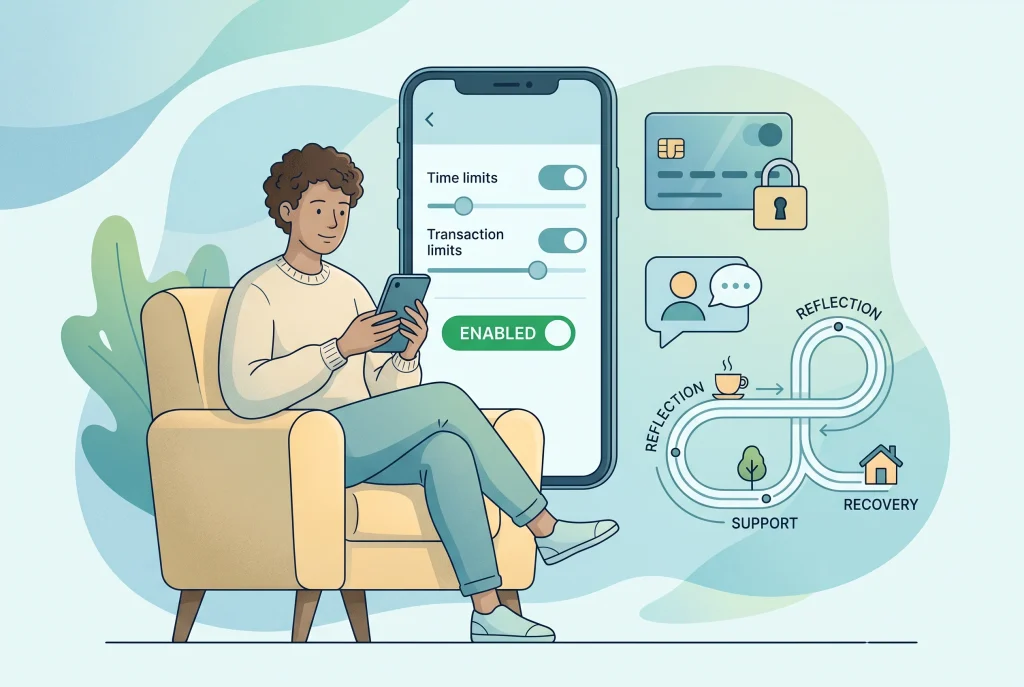
If you are interested in gambling sites because GAMSTOP, a bank gambling block or another control is in the way, the safest next step is not another account. This page is support-led. It explains what the main protection tools are for, where help can fit, and how to respond when gambling is starting to feel hard to control.
Nothing here is emergency care, medical advice, debt advice or legal advice. It is a practical route map to recognised support pages and safer next steps. If there is an immediate risk of harm to you or someone else, use urgent local help rather than a gambling website.
If you feel an operator is unfairly withholding your funds despite your self-exclusion status, you can explore official complaint routes and fair withdrawal procedures.
Primary Functions of Bank Blocks and Self-Exclusion Schemes
GAMSTOP is a self-exclusion scheme for online gambling companies licensed in Great Britain. Official and support sources describe self-exclusion as a tool for people who need help to stop gambling. That framing matters. A self-exclusion is not a puzzle to solve or a barrier to route around. It is a protective commitment made at a point when gambling has become risky, stressful or difficult to manage.
GAMSTOP coverage is tied to online gambling companies licensed in Great Britain. That does not mean a site outside its coverage is a safer option. For someone who has self-excluded, looking for gambling outside the scheme can undermine the reason the exclusion was set. If that is the situation, use the support options below before making any gambling-related decision.
The same principle applies if you are trying to stop gambling without being on GAMSTOP. The presence of urges, losses, secrecy, borrowing, debt pressure or repeated attempts to win back money are reasons to move toward support, not toward a new deposit.
Bank gambling blocks are protection, not a payment inconvenience
The Gambling Commission has a public page on blocking gambling payments with your bank, and support organisations also describe bank gambling blocks as part of a layered approach. A bank block can make it harder to spend impulsively, especially at moments when gambling feels urgent. Some banks offer their own controls, and the details can vary, so the practical step is to check your own bank’s support pages or contact the bank directly.
If a gambling payment is blocked, avoid treating the block as a technical problem. Do not search for ways to route the payment through a different card, wallet, cryptocurrency route or another person’s account. That kind of workaround can increase harm and can create account, financial and relationship problems. A block is a useful signal: pause, keep the barrier in place and consider whether you need extra help.
Always prioritize your financial well-being when browsing independent UK casino sites.
Which support step fits your situation?
| Situation | Useful next step | What to avoid |
|---|---|---|
| You are already on GAMSTOP or trying to stop. | Keep the exclusion in place, consider blocking software and speak to a support service before acting on an urge. | Do not look for a gambling site outside the scheme or for a way to change account details. |
| Your bank has blocked a gambling payment. | Treat the block as protection. Check your bank’s gambling-control guidance and strengthen the block if possible. | Do not move to another payment route simply to make the deposit go through. |
| Debt, rent, bills or borrowing are part of the pressure. | Use debt and money-help resources alongside gambling support. MoneyHelper has public guidance on gambling and debt. | Do not chase losses with a larger deposit or a bonus that depends on more play. |
| You feel unable to stop right now. | Contact a support service, tell someone you trust if that is safe, and put time between the urge and any payment. | Do not stay alone with a payment page open while trying to decide. |
Helpline and support resources
The National Gambling Helpline operated by GamCare is listed by NHS, GambleAware and GamCare as free and open 24 hours a day on 0808 8020 133. It is a gambling-support helpline, not emergency care. You can also use GamCare, GambleAware information on blocking and self-exclusion, NHS information on help for gambling problems and MoneyHelper guidance on gambling and debt.
TalkBanStop is another support route linked to talking support, self-exclusion and blocking tools. The important point is the combination. One tool can help, but layers are often stronger: self-exclusion, bank blocks, blocking software, honest conversations, debt support and reducing access to quick payments can all reduce the chance of a rushed deposit.
If you are worried about someone else, support pages can still help you understand language, boundaries and practical steps. Avoid taking control of another adult’s accounts without advice, but do consider encouraging them toward recognised support if gambling is affecting money, relationships, work, sleep or safety.
What not to do when a block is active
- Do not open a new gambling account to get around GAMSTOP or a bank block.
- Do not use a VPN, another person’s payment details, altered identity information or a different payment route to bypass a control.
- Do not treat “no ID” claims as a safe shortcut. Lack of checks can be a warning sign.
- Do not chase a loss with a bonus, a larger stake or a deposit you planned for bills.
- Do not ignore debt pressure. Gambling and debt can reinforce each other quickly.
This is not about blame. Blocks and exclusions exist because gambling products are designed to keep attention and money moving. If a barrier gives you time, use that time. Close the payment page, step away from the device and contact support before making another gambling decision.
How this guide connects to the rest of the site
The other pages on this site explain checks around licences, payments, withdrawals, bonuses and data. Those pages are useful when someone is making a cautious account decision and is not trying to get around a protection tool. If self-exclusion, bank blocks, debt or loss pressure are present, this support page should take priority.
- Return to the main guide for an overview of what the phrase “casino not on GAMSTOP” can mean in a UK context.
- Read about payments and verification only if you need to understand why checks and restrictions exist, not to avoid them.
- Read the pre-account check guide if you are not self-excluded and want to understand public-register checks before sharing money or ID.