
£1 Minimum Deposit Casinos in the UK: How It Works
 Available in GB
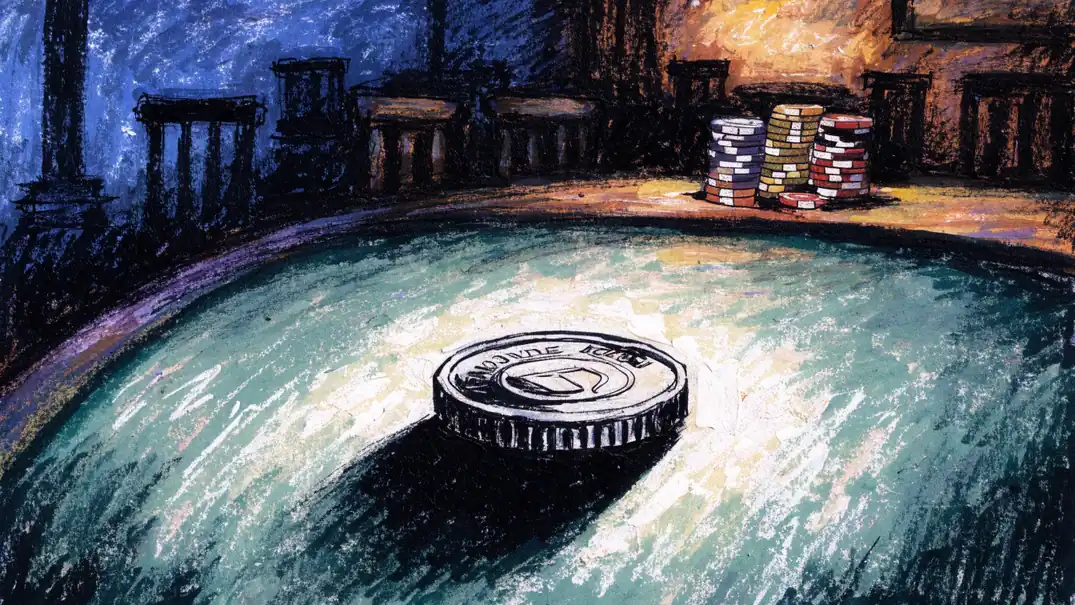
A £1 cashier minimum can enable real-money play, but payment routes, offers and withdrawal rules may set separate conditions.
What a £1 Minimum Deposit Means in Practice
A £1 minimum deposit means that the casino’s cashier can accept a payment of one pound when the relevant account and payment route are selected. It does not mean that every part of the account is built around that amount. The cashier minimum, the qualifying deposit for an offer and the amount needed to request a withdrawal are separate terms.
Some UK casinos accept deposits as low as £1. That makes a one-pound deposit a possible entry point for real-money play, but the practical value depends on the operator’s account rules. A low cashier threshold may apply only to a particular payment method, while another route at the same casino may display a different minimum. The amount shown in the cashier is therefore more significant than a headline describing the site as a low-deposit casino.
The cashier minimum is only one condition
The cashier minimum is the smallest amount the operator is prepared to process for a deposit. If the cashier accepts £1, the money is credited to the gambling account after the transaction is approved. This does not automatically activate a welcome offer, create bonus funds or guarantee that the balance can be withdrawn immediately.
A specialist review reported six UKGC-licensed casinos accepting genuine £1 minimum deposits, but that figure should be treated as a time-specific finding rather than a permanent description of the British market. Operator terms, payment arrangements and cashier settings can change. One operator-specific claim in the same type of material identified NetBet as the only UKGC-listed casino on that list showing a £1 cashier minimum. Such a statement describes the reviewed list, not an enduring rule for every UK casino.
The distinction matters because “minimum deposit” can be used loosely. A page may describe a casino as accepting deposits from £1 even when the amount is available only through one route, for one account type or under a particular cashier configuration. The account may still show a higher threshold elsewhere. The wording on an information page is not a substitute for the amount displayed before the transaction is confirmed.
£5 Minimum Deposit Casinos in the UK: What It Means
A £1 deposit may not qualify for an offer
A deposit can be accepted without being promotional. Welcome offers commonly specify a qualifying deposit that is higher than the smallest amount the cashier accepts. A specialist review placed qualifying deposits for such offers in the £5 to £10 range. On that basis, a £1 payment may fund the account but fail to trigger the advertised reward.
The relevant condition is the minimum qualifying deposit in the promotion’s terms, not the general cashier minimum. Other requirements may also apply, including registration conditions, an opt-in step or restrictions on the payment route. A casino can therefore present two accurate but different statements: the account accepts a £1 deposit, while the welcome offer requires a larger deposit.
This is why a £1 deposit should not be treated as a reduced version of a promotional deposit. If the qualifying threshold is not met, no bonus balance is added under that offer. The deposited pound remains separate from any promotional entitlement, subject to the operator’s ordinary account and withdrawal rules.
£2 Minimum Deposit Casinos in the UK: What to Check
A specialist review also reported that many UK casinos exclude £1 deposits from welcome offers. That evidence is provider-specific and subject to change, so the promotion’s current terms take precedence over a general description of the casino. The absence of a bonus does not make the deposit invalid; it simply means that acceptance at the cashier and promotional eligibility are different questions.
Withdrawal is a separate threshold
The ability to deposit one pound does not establish that one pound can be withdrawn. Some UK casinos set a withdrawal minimum above the deposit minimum, according to the same type of specialist review. A balance below that threshold may remain in the account until it reaches the required amount, or the operator’s terms may specify another treatment.
Deposit and withdrawal rules can also differ in their purpose. The deposit minimum controls the smallest incoming transaction. The withdrawal threshold controls the smallest outgoing request that the casino will process. They may be identical, but there is no basis for assuming that they must be.
The distinction is particularly important where a small deposit is intended to test an account. A successful £1 payment demonstrates that the cashier accepted that transaction. It does not demonstrate that a later withdrawal request for the same amount will be available or processed. The withdrawal page and the general payment terms must be considered separately.
A £1 minimum deposit may only be available through specific payment routes and does not guarantee eligibility for all welcome offers or withdrawal amounts.
What the £1 label establishes
A verified £1 minimum establishes a narrow point: a payment of that amount can be accepted under the conditions shown by the operator. It does not, by itself, establish promotional eligibility, universal support across payment methods or a matching withdrawal facility. Nor does it establish that the same cashier setting will remain unchanged.
The most precise description is therefore “a casino with a £1 cashier minimum”, rather than an unrestricted claim that every account function begins at one pound. For UK players, the relevant checks are the amount displayed in the cashier, the qualifying deposit stated in the offer terms and the minimum shown for withdrawals. These three figures describe different stages of the account and should not be conflated.
How £1 Deposits Compare with Other Minimums
A £1 cashier minimum sits at the bottom of the deposit scale for UK online casinos. It should therefore be compared with the more common thresholds rather than treated as a standard account feature. A specialist review reports that the lowest deposit tier is £1, but also describes it as rare and associated with particular payment routes, including Boku or Payforit mobile billing. This makes the figure a useful starting point for comparison, not evidence that every cashier or every payment method will accept it.
The main deposit brackets
The clearest comparison is between the £1, £5, £10 and £20 levels:
| Cashier minimum | What it indicates |
|---|---|
| £1 | The lowest stated deposit tier, found only at some casinos or through particular payment routes |
| £5 | A lower-than-standard threshold offered by some operators |
| £10 | The direct banking minimum identified in a specialist review as typical for casinos in that category |
| £20 | A higher threshold used by some operators |
£20 Minimum Deposit Casino UK: Payments and Limits
The £1 level is consequently distinct from a general low-deposit policy. A casino may be described as accepting small deposits while setting its cashier minimum at £5 or £10. Conversely, an operator may display £1 for one route but apply another threshold elsewhere in the cashier. The amount shown before a transaction is therefore more informative than a broad label such as “low deposit”.
The same specialist review places the direct banking minimum at £10, while noting operators with thresholds of £5 and £20. That range demonstrates why a single market figure cannot describe all UK casinos. Direct banking is a payment category rather than a guarantee of one fixed minimum, and the operator’s cashier settings remain decisive.
Why the payment route can change the threshold
At a particular UK operator, the minimum deposit is generally the same across the available payment methods. There is, however, an important qualification: some casinos set a higher minimum for direct banking than for cards or e-wallets. The result is a difference between the operator’s general deposit policy and the amount accepted through a selected route.
For example, a site may publish one minimum deposit in its general terms but show a different figure after a payment method has been selected. A £1 option may therefore be limited to a route that the operator has configured separately, while direct banking remains at a higher bracket. The reverse distinction also matters: the presence of a £1 threshold for one route does not establish that cards, e-wallets or direct banking support the same amount.
£1 tier
The lowest stated tier, often associated with specific routes like mobile billing.
£5 tier
A lower-than-standard threshold offered by some operators.
£10 tier
The direct banking minimum identified as typical for many casinos.
£20 tier
A higher threshold used by some operators.
This is particularly relevant where the lowest tier is linked to mobile billing. The specialist review describing £1 as the absolute lowest tier also associates it with specific services rather than with every funding method. Such evidence supports a narrow conclusion: a genuine £1 minimum deposit exists in the UK market, but availability can depend on the route presented in the cashier.
Deposit minimum versus qualifying minimum
A further distinction appears when promotions are considered. The amount accepted by the cashier is not necessarily the amount that qualifies for a welcome offer. A specialist review states that some bonuses require a qualifying deposit of £10 even where the platform accepts deposits of £5. The same principle can apply more sharply to a £1 deposit: money may be accepted into the gambling account without triggering a promotional condition.
This means that a comparison of minimums should keep two thresholds separate:
- the cashier minimum, which determines whether the transaction can be submitted; and
- the qualifying minimum, which determines whether the deposit meets an offer’s entry condition.
A £1 deposit can therefore be the lowest available way to fund an account while remaining below the threshold attached to a bonus. The difference is not a contradiction. It reflects two separate rules: one governing access to the cashier and another governing promotion eligibility.
The same care is required when describing a “best” or “legit” £1 minimum deposit casino. A £1 figure alone does not establish that every payment route has that threshold, that a bonus will be activated, or that the operator applies the same terms to all deposits. The meaningful comparison is between the amount accepted for the chosen route and the amount required by any associated offer.
Reading the brackets accurately
The deposit brackets can be summarised without treating them as interchangeable. £1 is the rare lowest tier; £5 is a lower threshold used by some operators; £10 is the figure identified for direct banking in the cited specialist review; and £20 represents a higher minimum used by some casinos. These figures describe different cashier settings, not a ranking of casino quality.
£3 Minimum Deposit Casino UK: How It Works
A low threshold can also be narrow in scope. It may apply only to one payment route, while another route has a higher minimum. In addition, a promotional requirement can sit above the cashier minimum. For anyone comparing online casinos with a £1 minimum deposit, the relevant evidence is therefore the payment-specific cashier display and the terms attached to any offer, rather than the headline deposit figure alone.
Our top casino picks for the UK
- AmunbetBonus: Join now and get 450% up to 2,700 GBP + 450 FS · Payout speed: 1-3 business days
- DieselwinBonus: Welcome Pack 250% up to £4000 + 200 FS · Payout speed: 1-3 business days
- EvoSpinBonus: 125% up to €2500 + 125 Free Spins · Payout speed: 1-3 business days
- WinBeastBonus: €5000 + 500 FS + €650 Freebet · Payout speed: 1-3 business days
- ZombillionBonus: Welcome Pack 250% up to £4000 + 200 FS · Payout speed: 1-3 business days
- BritsinoBonus: Welcome Package – Get your £2,200 + 2,000 FS · Payout speed: 1-3 business days
Using a £1 Deposit for Real-Money Play
A £1 deposit creates a real-money balance, but it does not create a large playing fund. Its practical value depends on the stake selected for each game and on the casino’s withdrawal rules. The balance can be used for cash play where the account is active and the chosen game accepts the available stake. It should not be treated as evidence that withdrawing a small win will be straightforward.
Many online slots accept stakes between £0.10 and £0.20 per spin. At the lower end, a £1 balance corresponds arithmetically to ten spins if each spin costs £0.10 and no winnings are returned. At a £0.20 stake, the same balance covers five spins under that same assumption. These are not guaranteed numbers of spins: a losing result reduces the balance, while a winning result changes it. Other games may use different stake settings, so the displayed minimum for the selected title matters more than the account’s cashier minimum.
Practical play with £1
At a £0.10 stake, a £1 balance corresponds to ten spins if no winnings are returned. At a £0.20 stake, the same balance covers five spins under the same assumption.
The distinction between a deposit minimum and a playable stake is important. A casino may accept a £1 deposit while offering games whose minimum stake is higher than the available balance. In that situation, the account has been funded but the balance cannot be used on that particular game. A slot accepting a £0.10 stake presents a different practical situation from a game requiring more than £1 to place a single round. The cashier figure therefore says how little can be credited to the account, not how many games are available at that balance.
Balance, outcomes and continued play
A small balance also leaves little room for variance. One losing spin consumes a substantial share of £1 when compared with a larger starting balance. A win may extend play, but neither the amount nor the timing of a return can be inferred from the deposit. The initial balance is therefore better understood as a limited test of real-money play than as a reliable session budget.
Game rules can also affect the amount that remains available. A stake is deducted when a round is placed, and the result may return nothing or add winnings to the balance. The relevant account figure is the current withdrawable or playable balance shown by the operator, subject to any separate restrictions. Promotional funds are a different category and should not be assumed to have the same access conditions as cash deposited by the account holder.
A £1 deposit can also be useful where the purpose is to confirm that a payment route and a casino account work together before a larger cash balance is placed at risk. That practical use concerns account funding and verification rather than the expected return from play. The outcome of any game remains uncertain, and the low entry amount does not alter the underlying risk.
£4 Minimum Deposit Casinos in the UK: How They Work
Why cashing out may require more than £1
The amount needed to make a deposit is not necessarily the amount needed to request a withdrawal. A casino may accept a £1 deposit but apply a higher minimum withdrawal threshold. A specialist review reports minimum withdrawal thresholds of £10 to £20 at many UK casinos; this is a time-sensitive observation about the operators covered by that review, not a fixed rule for every account.
This creates a clear distinction between a technically usable balance and a balance that can be transferred out. If £1 is deposited and no further money is won, the account may remain below the operator’s withdrawal threshold. If play increases the balance but not beyond that threshold, a withdrawal request may still be unavailable. The threshold can therefore exceed the original deposit by a wide margin, even where the cashier accepted that deposit without difficulty.
A separate specialist review describes minimum withdrawal amounts from £1 to £5 for some casinos and payment arrangements. That range should not be applied automatically to every operator or every payment route. The casino’s own cashier and withdrawal terms determine which threshold governs the account. Deposit and withdrawal conditions can differ even when the same payment method is used in both directions.
Checking the cash-out conditions before play
The relevant terms include the minimum withdrawal amount, any identity checks, and whether the casino requires the withdrawal to return through a particular route. These conditions affect access to winnings, not the amount that can initially be deposited. A £1 minimum deposit casino may therefore permit a small cash balance while imposing a separate process before funds can leave the account.
Attention A £1 deposit does not ensure that a £1 withdrawal is possible, as many UK casinos set higher minimum withdrawal thresholds.
A low balance also does not remove age or account-verification requirements. UK players must be at least 18, and operators must verify age before allowing deposits. A withdrawal can involve further account checks where required by the operator’s procedures. The ability to place a small deposit should not be confused with an unconditional right to immediate payment.
For real-money play, the central calculation is consequently not just “Can £1 be deposited?” It is whether the selected game accepts a stake compatible with the balance and whether the resulting account value can meet the applicable withdrawal condition. Those two points determine the practical usefulness of a £1 minimum deposit casino more directly than the headline cashier figure.
Payment Methods That Can Support a £1 Deposit
The payment route is often more decisive than the advertised cashier minimum when a casino account is funded with £1. A platform may display a low minimum deposit while limiting that amount to particular methods, or while presenting different options after the account’s location and verification details have been checked. The funding route therefore needs to be considered separately from the casino’s general deposit policy.
Debit cards
Visa and Mastercard debit cards are accepted at almost all UK online casinos and can support low-value deposits. They are funded directly from a bank account, which keeps them within the permitted framework for gambling payments. Credit cards cannot be used for gambling deposits: the UK Gambling Commission’s ban, introduced in 2020, also covers credit-card funding routed through a money service business.
No Minimum Deposit Casinos UK: How £1 Deposits Work
For a small deposit, a debit card has a practical advantage: the requested amount can be entered directly rather than being tied to a prepaid voucher denomination. Whether a particular casino accepts £1 through Visa or Mastercard remains an operator-specific cashier setting, however. The card brand alone does not establish the minimum that will be processed.
The bank account behind the card must also be suitable for the transaction. A declined payment may result from the bank, the casino’s payment processor, verification controls or a mismatch in account details. Repeated attempts do not change the operator’s stated minimum and may create unnecessary payment records, so the cashier’s current instructions are more relevant than a generic list of supported card brands.
E-wallets funded by debit
E-wallets can provide another route for a small deposit, but their funding source matters. A wallet may be used for gambling when it is funded by debit, while wallet payments that allow credit-card funds to be used for gambling are not permitted. This distinction concerns the origin of the money rather than merely the name of the wallet.
The casino may apply its own transaction rules to an e-wallet even where the wallet itself can process a small payment. The cashier can show a different minimum for an individual method, and a payment provider may reject a transaction that falls outside its processing rules. A visible e-wallet logo is therefore evidence of support for that route, not proof that a £1 deposit will be accepted.
E-wallets also involve account-level checks. The name registered with the wallet should correspond to the gambling account, and the operator may require identity or payment verification before allowing funds to be used or withdrawn. Those checks are part of the payment process and do not disappear because the deposit is small.
E-wallets
Digital accounts used to facilitate online payments, which can be funded by debit cards to comply with UK gambling regulations.
Direct banking
Direct banking deposits transfer money from a bank account to the casino through the available banking interface. This route is compliant with UK gambling-payment rules because the funds originate from a bank account rather than a credit facility. It can be useful where a debit card or e-wallet is unavailable, but the cashier may set a different minimum for direct banking.
A specialist review of UK casino payment policies identified £10 as the typical minimum for direct banking, with some operators setting £5 and others £20. Those figures describe the type of variation found in published operator information; they do not establish the amount available at every casino. A platform that permits a £1 deposit through another route may therefore require more through direct banking.
The transaction may also take longer to appear than a card payment, depending on the banking service and the operator’s processor. No general processing time should be assumed from the fact that direct banking is listed. The relevant information is the cashier instruction attached to the account at the time of payment.
Paysafecard
Paysafecard works differently from a debit card because it is purchased in fixed denominations of £5, £10, £25, £50 and £100. A single voucher does not need to be consumed in one casino deposit: its remaining balance can fund several smaller deposits. This makes the method technically relevant to low-value funding even though the voucher itself is not available in a £1 denomination.
The remaining voucher balance should be distinguished from the amount accepted by the casino. If the casino’s cashier permits a £1 transaction through Paysafecard, the voucher can be used for that amount and retained for later deposits. If the cashier imposes a higher minimum for the method, the unused balance does not override that rule.
Online Casinos with No Sister Sites: UK Guide
Paysafecard is also a prepaid instrument rather than a bank account. The source of the voucher funds must still comply with the UK prohibition on credit-card gambling. A payment method is not made acceptable simply because it is prepaid if its funding arrangement permits prohibited credit-card money to reach gambling transactions.
Fees and the amount that reaches the account
A small deposit can be affected disproportionately by a transaction charge. A specialist casino payment review reported flat provider fees ranging from £1 to £3 for some transactions. This is a source-specific observation, not a universal charge applied by every payment method or casino. The fee may be imposed by the provider, the operator or the account arrangement, and the cashier may display it before confirmation.
The important distinction is between the amount requested, the amount debited and the balance credited. A £1 request may be processed without a fee, rejected because of a method-specific rule, or accompanied by a separate charge. The payment screen is therefore the authoritative place to check the final transaction terms.
For any compliant route, age verification and account controls remain relevant. UK players must be at least 18, and operators must verify age before allowing a customer to deposit. New customers must also be prompted to set a financial limit before making the first deposit. These requirements apply equally to a £1 deposit and to a larger payment.
Mobile and Online Play with a Small Balance
A £1 minimum deposit online casino in the UK can make the account accessible from a desktop browser or a mobile device, but the small opening balance does not alter the conditions governing online gambling. The relevant question is not only whether a casino displays a £1 cashier minimum, but also whether its games, account controls and identity checks operate within the British regulatory framework.
Important distinction
A £1 cashier minimum is a narrow point regarding account funding and does not dictate promotional eligibility or withdrawal rules.
For real-money online casino play, the operator must hold a UK Gambling Commission licence when offering gambling to customers in Great Britain. The same requirement applies whether the account is accessed through a computer, a phone or a tablet. A mobile casino is therefore not a separate legal category: it is the same remote gambling service delivered through a smaller screen or an application.
What a small balance means on mobile
A limited balance can make stake selection especially important. Some online slots allow a spin at ten pence, while others begin at twenty pence. At those stake levels, a £1 balance may permit several individual spins, although the exact number depends on the selected game and stake setting. The balance can therefore provide access to play without implying a long session or a predictable result.
Mobile presentation does not change the underlying game rules. The account balance, game outcome and applicable terms remain connected to the operator account rather than to the device. Switching from a browser to a mobile application should not be treated as a way to obtain different gambling conditions.
British rules also impose controls on online slot play. Autoplay is not permitted, so each spin must be initiated separately. Each online slot spin must last at least 2.5 seconds. These requirements matter even when the balance is only £1: a small deposit does not permit faster or less controlled play.
Age and account controls
Only adults aged 18 or over may play real-money online casino games in the UK. Operators must verify a customer’s age before allowing funds to be deposited into a gambling account. This requirement applies equally to mobile access and desktop play; using a phone does not remove the verification step.
Non-UKGC Licensed Casinos: Rules and Risks
A new customer must also be prompted to set a financial limit before making the first deposit, with account-level controls available thereafter. Such controls are relevant to a small balance because the ease of adding funds through a mobile device can otherwise make the initial amount a poor measure of total spending. A £1 starting balance should therefore be considered alongside the account’s broader limit settings, rather than as a complete gambling budget.
The practical distinction is clear: mobile access concerns where and how the game is played, while the £1 figure concerns the amount accepted at account funding. Neither feature guarantees a particular number of spins, a particular outcome or continued access to a game.
£1 Deposits, Promotions and Gambling Controls
A £1 cashier minimum does not establish eligibility for a welcome offer. Promotional rules can set a separate qualifying deposit, and some UK casinos exclude their lowest deposit bracket from welcome promotions. A deposit may therefore fund ordinary real-money play while leaving the promotional balance inactive. The relevant condition is the offer’s own minimum qualifying deposit, not merely the smallest amount accepted by the cashier.
The distinction also matters when an offer advertises bonus funds or free spins. The deposit threshold, eligible payment route, expiry condition and wagering rule form one set of terms. A low deposit should not be treated as evidence that every advertised incentive is available. A specialist review has reported that welcome offers commonly require deposits of £5 to £10, but this is not a fixed rule for every operator and the current promotion terms take precedence.
Wagering requirements update
Since 19 January 2026, the UK Gambling Commission has capped wagering requirements for gambling incentives at 10 times the bonus funds.
Bonus wagering is now subject to a statutory limit. Since 19 January 2026, the UK Gambling Commission has capped wagering requirements for gambling incentives at 10 times the bonus funds. Older promotional material may still refer to requirements between 30x and 65x the bonus value; those figures describe the earlier range reported in specialist promotional material, not the current permitted ceiling. Any offer presented to British customers must comply with the current cap.
The small size of the deposit does not remove ordinary gambling controls. UK players must be aged 18 or over, and an operator must verify age before allowing a deposit. New customers must also be prompted to set a financial limit before their first deposit, with account-level controls available afterwards. These controls are relevant even when the initial balance is only £1: a low entry amount is not a substitute for deciding how much money can be spent.
GamStop is separate from promotional eligibility. A casino’s approach to self-exclusion cannot be inferred from its cashier minimum, and a £1 deposit should not be used as evidence that a site is outside the applicable controls. Remote operators serving Great Britain must hold a UK Gambling Commission licence, while self-exclusion arrangements remain a distinct matter from the amount accepted at deposit.
PayPal and Other Options for Small Deposits
PayPal is a recognised payment method for UK online gambling, but its availability at a particular operator depends on the cashier’s rules. A casino may support PayPal generally while applying a different minimum deposit to that method. Support for small deposits therefore cannot be inferred from the presence of the PayPal logo alone.
Anjouan Casino Licence and UK Gambling Rules
At a given UK operator, the minimum deposit is generally aligned across the available payment methods. An exception may arise where direct banking carries a higher threshold than card payments or e-wallets. This distinction matters when a casino advertises a low cashier minimum but presents separate limits after a payment option has been selected.
The same principle applies to other e-wallets. Their inclusion in a cashier does not, by itself, establish that a £1 transaction will be accepted. The relevant amount is the minimum shown for the selected route, together with any conditions attached to that route. Provider availability can also vary between operators, so a payment method supported at one casino cannot be treated as available across the market.
UK gambling deposits must come from permitted funding routes. Credit cards cannot be used for gambling deposits, and an e-wallet must not provide a route for credit-card funds to be used in gambling. PayPal and comparable services are therefore relevant only where the underlying funding arrangement complies with these restrictions.
A small-deposit assessment should distinguish three separate points: whether the casino offers the payment method, whether that route accepts the advertised minimum, and whether the operator applies a different threshold to another method. That distinction prevents general e-wallet support from being mistaken for confirmed PayPal acceptance of a £1 deposit at a specific UK casino.
When a Low Minimum Does Not Mean a Low-Cost Deposit
A £1 cashier minimum describes the smallest amount the operator will accept, not necessarily the amount that reaches the gambling balance. Transaction charges can matter disproportionately when the deposit itself is very small. A flat fee of £1 to £3 has been reported by a specialist review as applying to some payment providers. On a £1 transaction, that charge could equal or exceed the deposited amount; on a larger transaction, the same fee would represent a smaller share of the funding cost.
DO
- Check the specific minimum for your chosen payment method
- Verify the qualifying deposit required for any welcome offer
DON’T
- Assume a £1 deposit applies to all payment routes
- Conflate the cashier minimum with the withdrawal threshold
The practical distinction is therefore between the nominal deposit and the usable balance. If the cashier accepts £1 but the provider adds a separate charge, the account may contain only the credited deposit while the bank or payment account bears the additional cost. In other arrangements, the charge may be deducted during processing. The exact treatment depends on the provider’s terms and the transaction route.
This makes a low minimum deposit casino in the UK less straightforward to assess than its cashier label suggests. The relevant check is not only whether £1 can be entered, but also whether the selected payment method applies a fixed fee, currency-conversion cost or other transaction charge. A fee can make a low deposit casino UK offer economically unattractive even when the operator itself adds nothing to the deposit.
Payment costs should also be considered separately from any later withdrawal conditions. A small initial deposit may be technically possible while the overall transaction remains inefficient because the funding charge consumes much of its value.
What £1 Can Cover: Stakes, Spins and Bonus Winnings
A £1 balance can support several low-value spins, but the number depends on the stake selected and the game’s available denominations. Many online slots accept bets between £0.10 and £0.20 per spin. At the lower stake, the balance represents several individual spins; at the higher stake, it covers fewer. The calculation concerns the wager placed on each spin, not a promise of any return.
The balance can therefore provide access to gameplay without being large enough to sustain extended play. A losing spin reduces the remaining balance, while a winning spin may increase it. The result is determined by the game outcome, so the initial amount should be treated as a fixed entertainment budget rather than as a predictable sequence of plays.
£10 Minimum Deposit Casinos in the UK: How They Work
Free spins require a separate distinction. Where winnings from free spins are subject to wagering, the relevant requirement is applied to the total amount won rather than simply to the original deposit. A specialist review describes requirements in this category ranging from 30x to 65x the winnings. Thus, a small win can create a wagering obligation substantially larger than the stake that generated it. The balance shown in the account may not be immediately withdrawable while those conditions remain active.
The terms also determine which games contribute to the requirement and whether other restrictions apply. A £1 deposit can consequently cover low-stake spins, but any promotional winnings attached to free spins must be assessed by their conditions, not by the apparent cash balance alone.
Checking Whether a Casino Actually Accepts £1
A casino may advertise a minimum deposit of £1 while applying a different threshold to the selected payment route. The cashier is therefore the decisive check. After choosing a method, the displayed minimum should still show £1 before any transaction is confirmed. A general payment page or promotional banner does not establish that every route accepts the same amount.
At a given UK operator, the minimum is generally consistent across payment methods, but exceptions exist. Some casinos impose a higher threshold on direct banking than on debit cards or e-wallets. This means that a casino with a minimum deposit of £1 may support that amount through a card or a particular wallet while requiring more for direct banking. The payment screen, rather than the headline description, determines whether the available route meets the stated threshold.
The deposit and withdrawal rules must also be read separately. Acceptance of a £1 deposit does not mean that £1 can be withdrawn. A specialist review reported minimum withdrawal levels from £1 to £5 for casinos and payment methods in this category; this is an indication of variation, not a fixed market rule. The operator’s cashier and terms remain the relevant authority for the account in question.
A practical verification involves three checks:
- select the intended payment method and inspect its stated minimum;
- confirm that the amount is accepted before submitting the deposit;
- read the withdrawal section for any separate minimum or payment restriction.
This process distinguishes a genuine £1 cashier minimum from a general claim that may apply only to another route.
Why do online casinos accept a minimum deposit of £1?
A £1 minimum gives players a low-cost way to fund an account and try real-money play. It may apply only to particular payment routes, and it does not necessarily qualify for a bonus or meet the withdrawal minimum.
Which payment method is best for low-deposit casino players?
Debit cards are widely accepted and support low minimum deposits; some e-wallets also allow £1 transactions. Check the cashier’s minimum and any transaction fees before choosing a method.
Which payment methods usually accept £1 deposits?
Debit cards and some e-wallets support £1 transactions. The lowest deposit tier may also be limited to specific routes such as Boku or Payforit mobile billing.
How should players choose a low-deposit casino in the UK?
Check the minimum shown for your chosen payment method, the promotion’s qualifying deposit and the separate withdrawal minimum. Also consider any transaction fees, which can be £1 to £3, and verify the current terms before depositing.
Are low-deposit casinos safe to use in the UK?
A £1 minimum alone does not establish whether a casino is safe. Check that the operator is UKGC-licensed and review its payment and withdrawal terms.
What is the minimum deposit at UK casinos accepting direct banking?
The typical minimum is £10, although some operators set it at £5 or £20. Some casinos also set a higher minimum for bank transfers than for cards or e-wallets.